
Blog
UK vs Australia vs Canada: IELTS Score Requirements Compared (2026 Guide)

The Truth About IELTS Band Requirements for Popular Study Destinations
Ask five people what IELTS score you need to study abroad, and you’ll get five different answers. One says 6.5. Another insists 6.0 works everywhere. Someone’s cousin in Toronto swears Canada barely checks English scores at all. Here’s the thing: they might all be right, just about different situations. Your university sets one bar, the visa office often sets another, and if permanent residency is the goal, a whole separate scoring system takes over. If you’re in Lahore, Karachi, or anywhere else in Pakistan trying to plan your prep around a real target instead of a rumor, here’s exactly what each country expects in 2026, pathway by pathway.
The Numbers Side by Side
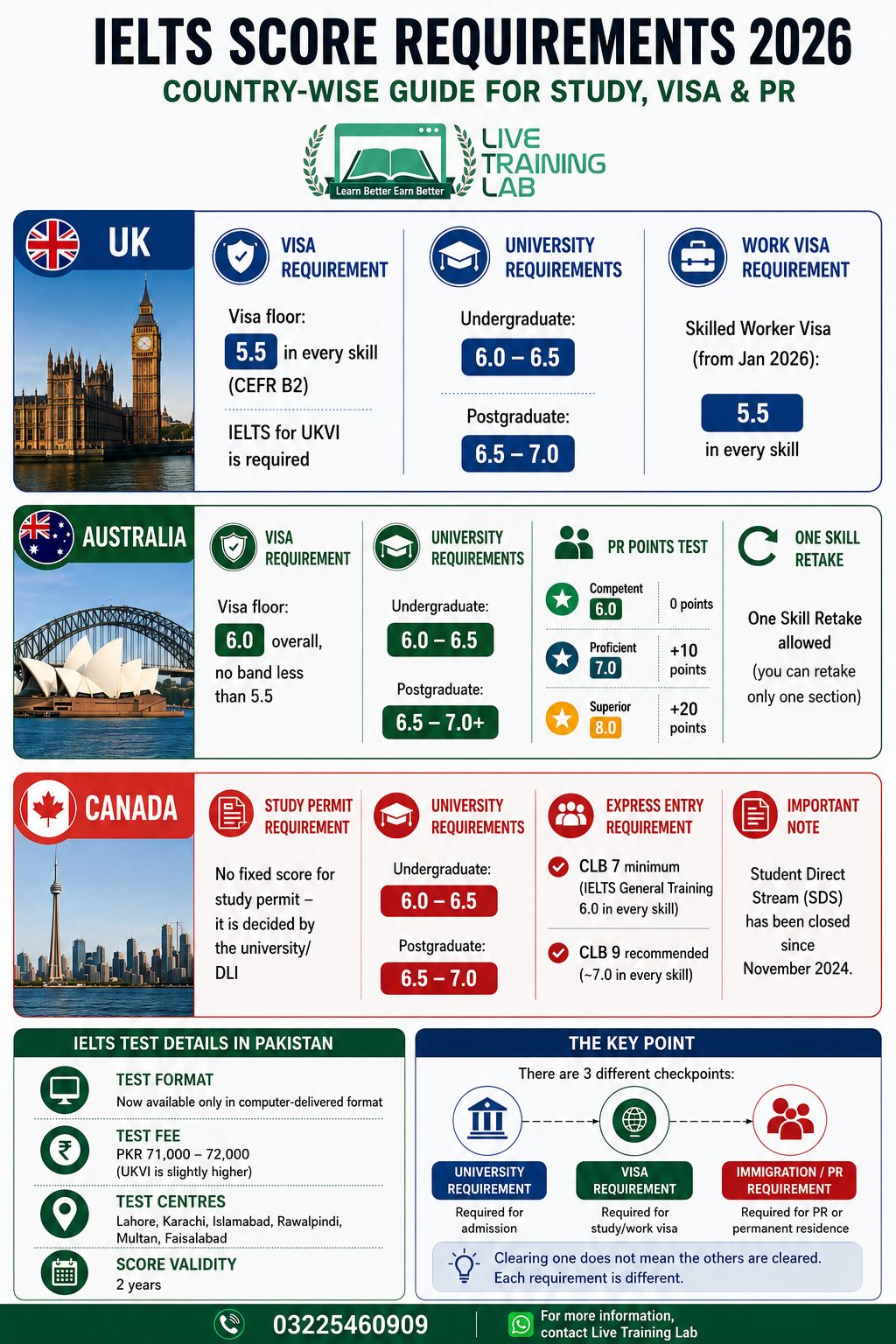
This infographic brings together everything scattered across university websites, visa policies, and immigration points tables into one clear comparison of the UK, Australia, and Canada. The UK’s visa floor sits at just 5.5 per skill, but universities typically ask for 6.0 to 7.0 depending on the course level. Australia keeps things most transparent, with a 6.0 overall visa requirement and a clear PR points table ranging from Competent (6.0) to Superior (8.0, +20 points). Canada doesn’t set one fixed score for its study permit that’s decided by your university but Express Entry for PR follows its own CLB system, requiring CLB 7 minimum and CLB 9 recommended. The key takeaway: university, visa, and PR are three separate checkpoints, and clearing one doesn’t mean the others are automatically cleared.

Why the “Right” Score Keeps Changing
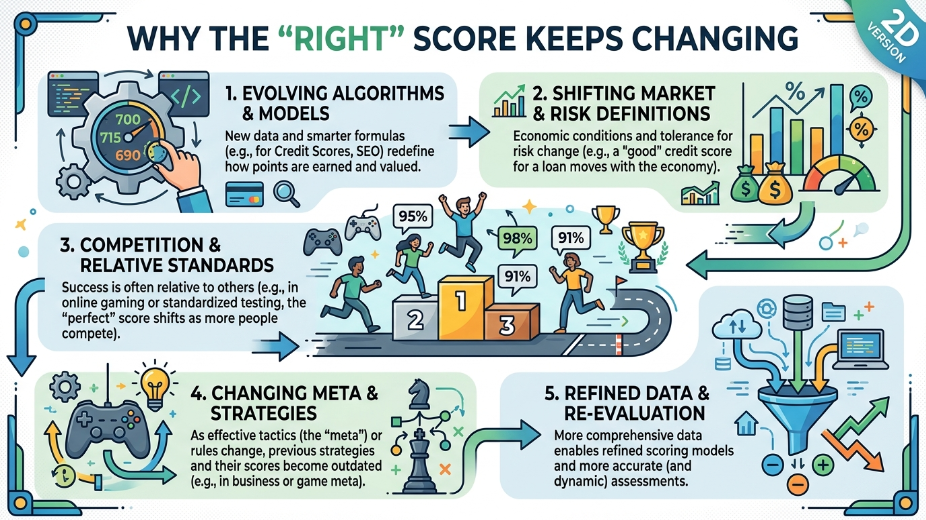
Three separate bodies usually weigh in on your English score:
- Your university, which sets its own admission requirements by course level and subject
- The immigration department the UK’s Home Office, Australia’s Department of Home Affairs, or Canada’s IRCC sets a separate floor for your visa.
- The immigration points system, if permanent residency is the eventual goal, rewards a stronger score with actual points instead of a simple pass or fail.
You can clear one and still miss the other, since each is checked separately.
IELTS Requirements for the UK
Student Visa Minimum
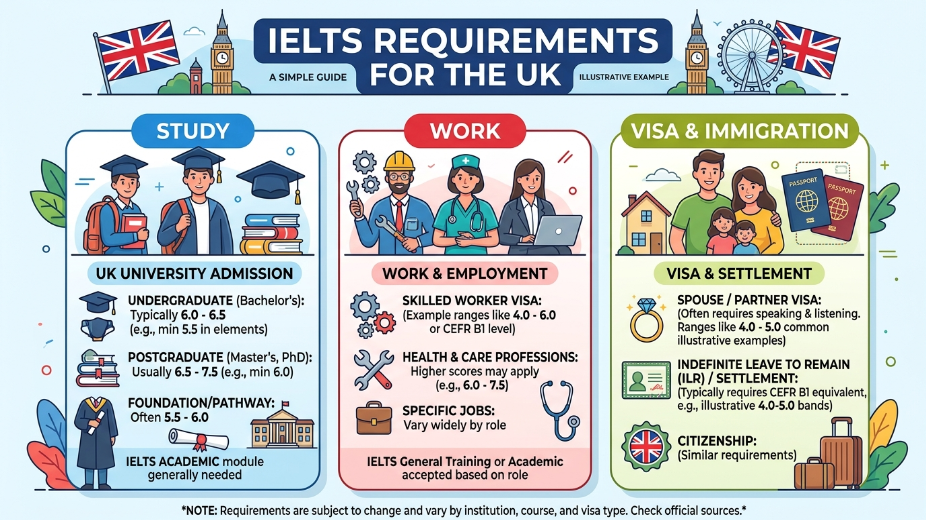
The Home Office sets its floor at CEFR level B2 for a Student visa a minimum of 5.5 in each of the four IELTS for UKVI components. Note the “for UKVI” part standard IELTS Academic isn’t automatically accepted for the visa itself; you need the UKVI-approved version, taken at an approved centre. Foundation or pathway courses below degree level sometimes accept slightly lower, around 5.0 to 5.5 overall.
What UK Universities Actually Ask For
The Home Office floor rarely decides your outcome your university’s own requirement usually does, and it’s almost always higher:
- Undergraduate degrees: 6.0 to 6.5 overall, no band below 5.5 or 6.0
- Postgraduate taught programs: 6.5 to 7.0
- PhD and research programs: 6.5 to 7.0, with Writing often held higher
- Medicine, law, and Russell Group universities: often 7.0, no component below 6.5
The Skilled Worker Visa
Since January 8, 2026, new Skilled Worker visa applicants need CEFR B2 too, the same 5.5-per-component standard as the Student visa, up from the previous B1 level. If you’re already on this route and just extending your stay, B1 still applies to you. Either way, scores stay valid for two years, so time your test around your actual application date.
IELTS Requirements for Australia
Student Visa (Subclass 500)
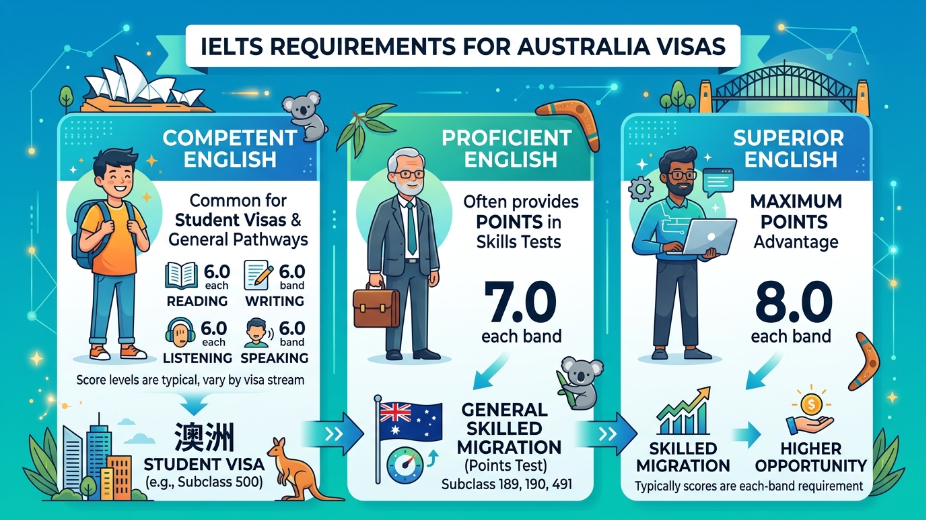
Australia raised its bar in 2026. Direct entry into a university degree now needs an overall score of 6.0, with no band below 5.5, half a band higher than before. Pairing your degree with an English preparation course (ELICOS) brings the entry score down to around 5.0, and foundation or pathway programs typically sit at 5.5. One useful update: Australia now accepts the IELTS One Skill Retake miss your target in just one section, and you can retake that section alone instead of the full test.
What Australian Universities Ask For
Most institutions set their own bar above the visa minimum, usually 6.0 to 6.5 for undergraduate courses and 6.5 to 7.0 or higher for postgraduate programs. Planning to stay on through the Temporary Graduate visa (Subclass 485)? That route generally asks for 6.5 overall, no component below 5.5.
Skilled Migration and the Points Test
For permanent residency through General Skilled Migration, English is scored in three tiers:
- Competent English , IELTS 6.0 in every band , minimum eligibility, zero extra points
- Proficient English , IELTS 7.0 in every band , adds 10 points
- Superior English , IELTS 8.0 in every band , adds 20 points
Since most competitive occupations now need scores well above the minimum, moving from Proficient to Superior is often the most controllable way to strengthen an application.
IELTS Requirements for Canada
Study Permit and University Admission
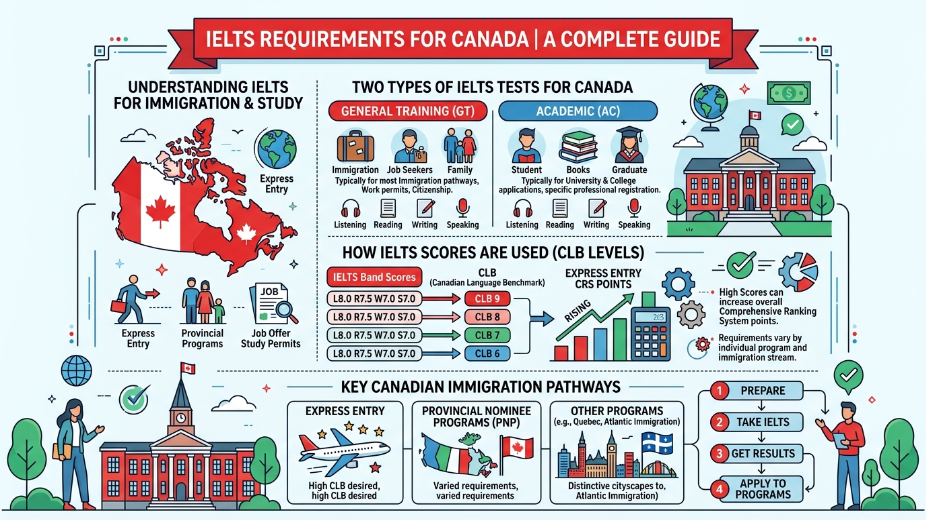
IRCC doesn’t publish one fixed IELTS number for the study permit itself your Designated Learning Institution (DLI) sets the requirement, and IRCC follows whatever your acceptance letter confirms. As a general guide, most Canadian universities ask for 6.0 to 6.5 overall for undergraduate programs and 6.5 to 7.0 for postgraduate programs, usually with no band below 6.0.
One update worth knowing: the Student Direct Stream, the fast-track route many Pakistani applicants used to plan around, was shut down in November 2024. Every applicant now goes through the same standard process, so an older guide mentioning SDS for Pakistan is out of date.
Express Entry and the CLB System
Aiming for Canadian permanent residency through Express Entry changes the scoring entirely. Canada converts your result into a Canadian Language Benchmark (CLB) level, and this trips a lot of people up immigration programs require IELTS General Training, not Academic. The two aren’t interchangeable here.
For the Federal Skilled Worker Program, CLB 7 is the usual minimum, matching an IELTS General Training score of 6.0 in each skill. Since Express Entry rewards stronger English heavily, many applicants aim for CLB 9 instead, roughly 7.0 in each skill, since it adds more points than the bare minimum meaningfully.
Provincial Nominee Programs set their own thresholds, often CLB 5 to CLB 7 always check your specific province’s current number.
The Numbers Side by Side
RequirementUKAustraliaCanada
Student visa/permit floor 5.5 in each skill (CEFR B2) 6.0 overall, no band below 5.5. No fixed IRCC number — set by your institution
Typical undergraduate asks 6.0–6.5 6.0–6.5 6.0–6.5
Typical postgraduate ask 6.5–7.0 6.5–7.0 6.5–7.0
Immigration/PR pathway Skilled Worker: 5.5 each skill Points test: 6.0 Competent, 7.0 Proficient (+10), 8.0 Superior (+20) Express Entry: CLB 7 (IELTS GT 6.0 each) minimum, CLB 9 recommended
Taking IELTS in Pakistan: Quick Notes
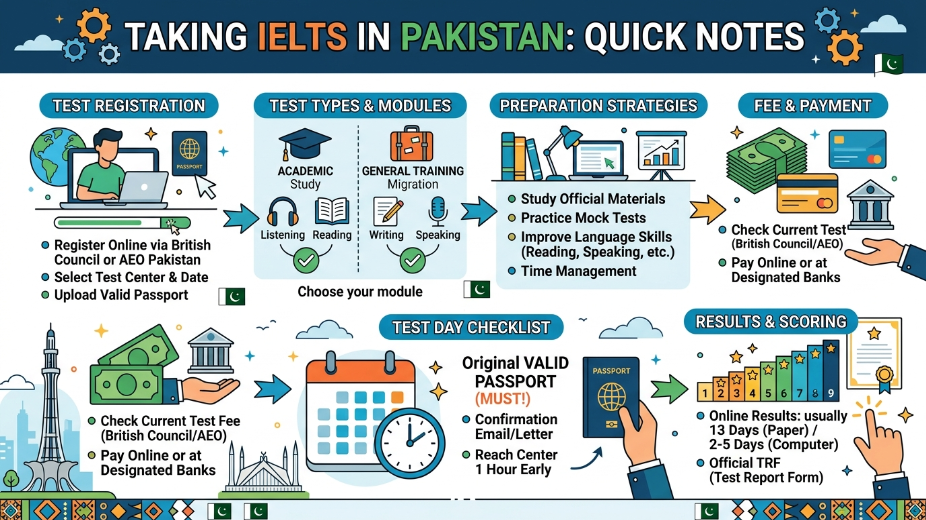
IELTS is now computer-delivered only in Pakistan; the paper-based option has been phased out. Fees currently run close to PKR 71,000 to 72,000 for standard Academic or General Training, with IELTS for UKVI priced slightly higher. British Council and IDP run test centres across Lahore, Karachi, Islamabad, Rawalpindi, Multan, and Faisalabad, so location is rarely the issue — available dates are. Book earlier than you think you need to, especially during peak intake months.
So Which Country Is Actually Easiest?
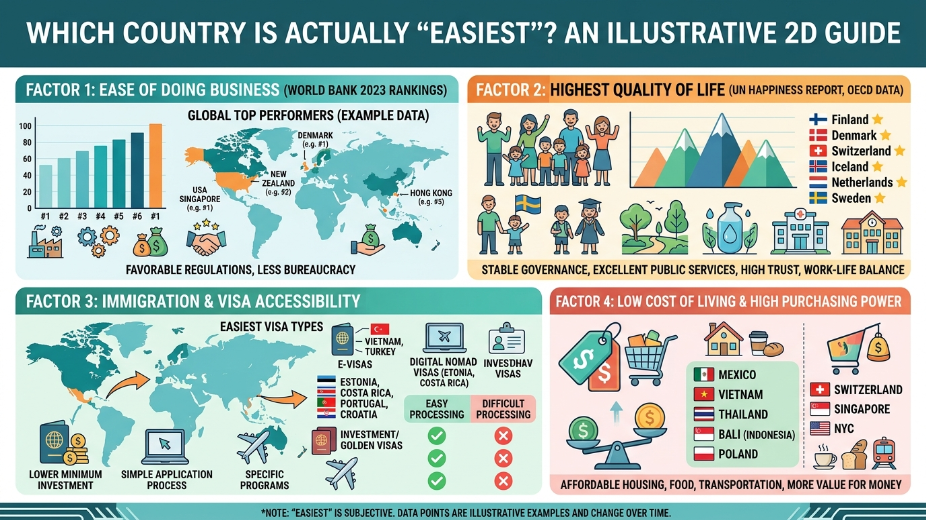
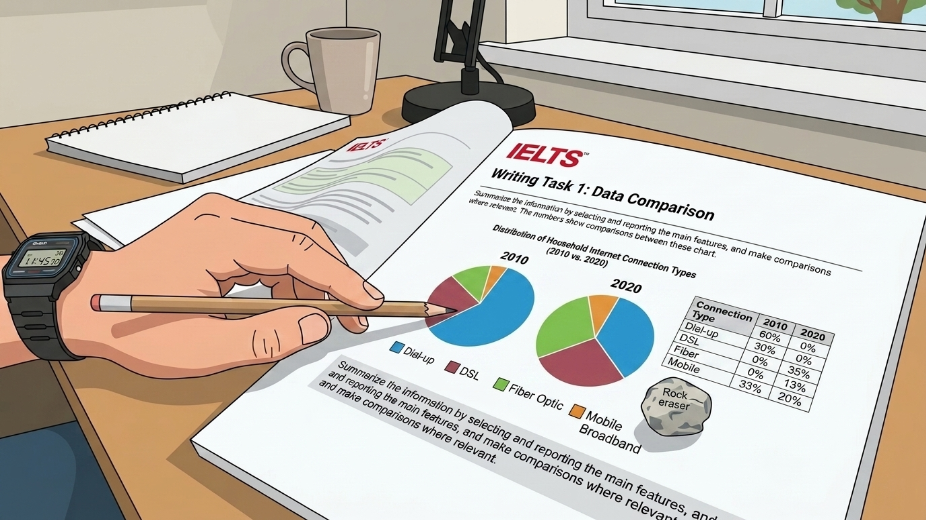
None of them is “easier” once you look past the headline number. The UK’s visa floor looks generous at 5.5, but your university offer will almost always ask for more. Canada doesn’t set one fixed number at all, which sounds easier, but its institutions land in the same 6.0–6.5 range as the UK and Australia anyway. Australia is the most upfront: one visa minimum, one points table, no guessing.
The more useful question isn’t which country has the lowest number, but what your number is for your goal. A university seat, a study visa, and permanent residency can each require a different score, sometimes within the same country. Choose your country by course, cost, and where you want to build a life, then prepare for the score that goal needs, with room to spare.
Tips to Reach Your Target Band Score
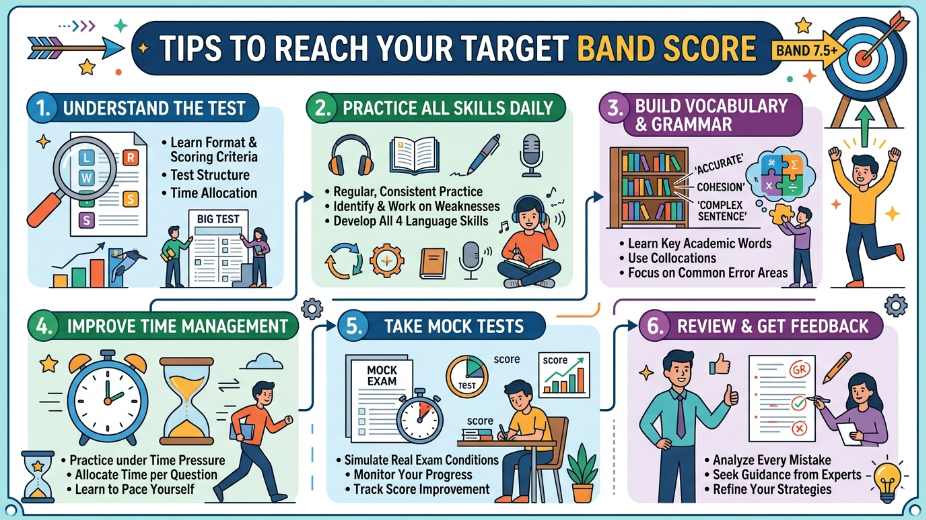
- Sit one full, timed mock test before planning anything. Your guessed level and your actual level are often half a band apart.
- Build daily listening and reading habits around real English news, podcasts, interviews not just IELTS textbooks.
- Practice Writing Task 2 weekly it’s consistently where test-takers lose the most marks, usually on structure, not grammar.
- Record your Speaking Part 2 answers and play them back hesitation costs more marks than accent does.
- If one section is holding back an otherwise strong score, look into the One Skill Retake before booking a full retest where it’s accepted.
- Give yourself real runway six to ten weeks of focused practice beats a rushed two-week cram before a deadline.
Frequently Asked Questions
What is the minimum IELTS score for a UK student visa?
The Home Office floor is CEFR B2, meaning 5.5 in each of the four IELTS for UKVI components. Most universities set their own requirement higher, often 6.0 to 6.5 for undergraduate courses.
Which country has the easiest IELTS requirements?
There’s no single winner. Canada doesn’t set one fixed study permit number, but its universities expect the same 6.0 to 6.5 range as the UK and Australia. Your real “easiest” option depends more on your course and career plans than on IELTS alone.
Do I need a different IELTS test for university versus immigration?
Sometimes. UK universities generally accept standard IELTS Academic, but a UK Student visa specifically needs IELTS for UKVI. Canadian immigration programs require IELTS General Training, while Canadian universities usually want Academic. Confirm which version your application needs before booking.
How long does an IELTS score stay valid?
Two years from your test date, across the UK, Australia, and Canada.
Can I study abroad without taking IELTS?
In some cases, yes. Many institutions also accept PTE Academic, TOEFL iBT, or similar tests, and some applicants qualify for exemptions based on prior education in English. Check your university’s accepted test list before assuming IELTS is your only option.
The pattern across all three countries is the same. There’s rarely one single IELTS score for your whole journey there’s a score for your course, a score for your visa, and sometimes a separate score for the life you’re building afterward. Figure out which one applies to you right now, aim comfortably above it, and give yourself enough time to prepare properly instead of racing a deadline. Requirements shift often, so double-check the current number on your university’s or the immigration department’s official page before you book anything.
If brushing up on your spoken English or picking up practical, in-demand skills is part of your plan before you go, Live Training Lab offers affordable, 100% online courses, including Spoken English, that students across Pakistan are already using to get ready. Take a look at livetraininglab.pk to see what fits.