
Why Choosing the Right IELTS Version Matters More Than You Think
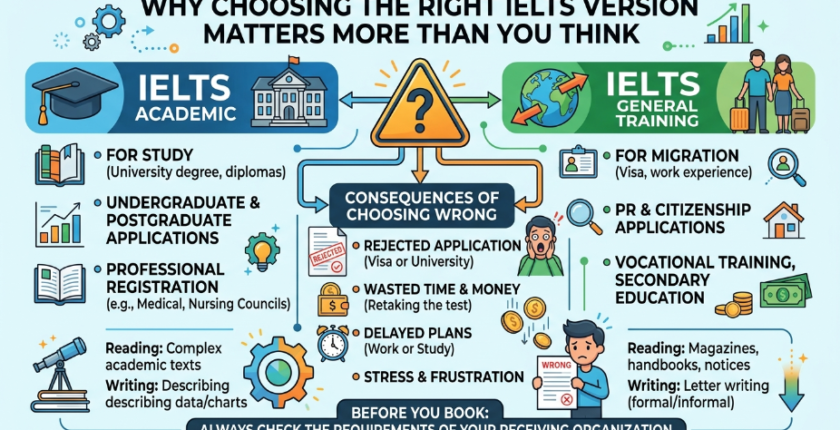
Every year, someone books an IELTS test, sits through it, gets a solid score back, and then finds out their university or visa office won’t accept it. Not because the score was too low, but because they sat the wrong version entirely. IELTS actually comes in two versions, Academic and General Training, and mixing them up is one of the most avoidable mistakes a candidate can make.
The confusing part is that listening and speaking are identical in both versions, so a lot of people assume the whole test is basically interchangeable. It isn’t. Reading and Writing are genuinely different, and picking the wrong one can mean redoing the entire test and paying the fee all over again. It’s an easy mistake, too: a friend mentions they scored well on “the IELTS,” never specifies which version, and you end up assuming whatever they took must be the same thing you need. Here’s exactly how to know which one you need, and how to avoid finding out the hard way.
IELTS Academic vs General Training

The Real Difference Between IELTS Academic and General Training
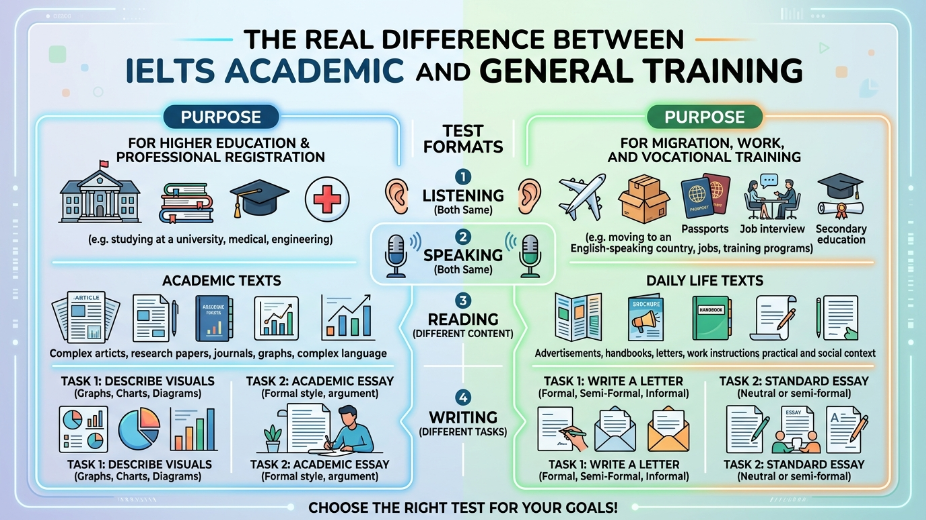
Before deciding which one applies to you, it helps to know exactly what changes between the two versions and what stays the same.
What Stays the Same
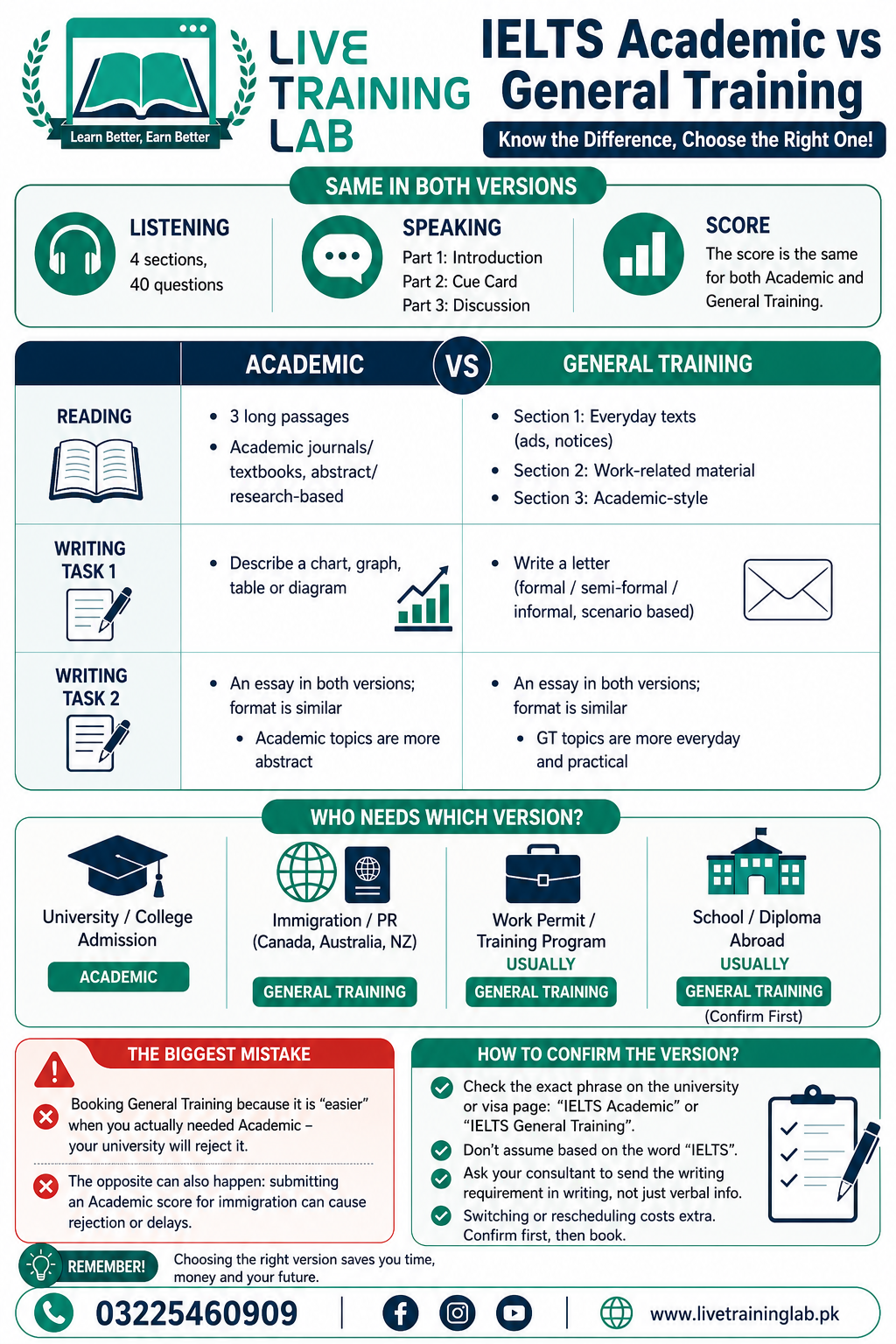
Listening and speaking are identical whether you register for Academic or General Training. Same four Listening sections, same 40 questions, same Speaking format with Part 1 introduction questions, a Part 2 cue card, and a Part 3 discussion. If a test center in Karachi or Islamabad schedules Listening or Speaking sessions together for both groups, that’s exactly why the content genuinely doesn’t differ. Whatever score you get in these two sections means the same thing regardless of which version you sat.
What’s Actually Different
Reading and Writing change significantly between the two versions.
Academic Reading gives you three long passages, usually taken from academic journals, textbooks, or serious magazine articles. The topics tend to be abstract or research-based, and the vocabulary reflects that. You might read about a scientific study, a historical analysis, or an economic theory, the kind of material you’d expect to encounter in first-year university coursework.
General Training Reading is split differently: the first section has short, everyday texts like advertisements or notices, the second section covers work-related material like job descriptions or training documents, and only the third section resembles something closer to an academic-style passage. Overall, it’s built around real-life and workplace reading rather than academic material.
Academic Writing Task 1: asks you to describe visual information, such as a bar chart, line graph, table, or diagram, and explain what it shows in your own words.
General Training Writing Task 1: instead asks you to write a letter, formal, semi-formal, or informal, depending on the situation, responding to a specific scenario, like writing to a landlord about a repair or to a friend about a change of plans.
Writing Task 2 is an essay in both versions, and the overall format is similar. Still, Academic topics can lean slightly more abstract or research-oriented, while General Training topics usually stay closer to everyday, practical situations.
Which One Do You Actually Need?
This comes down entirely to your purpose, not your comfort level with either format.
- Studying at a university or college abroad: You need Academic. This includes undergraduate admissions, master’s programs, and most professional registration processes that require a degree-level English test.
- Immigration or permanent residency: You need General Training. This covers points-based immigration systems, including skilled migration streams to Canada, Australia, and New Zealand.
- Work permits or training programs abroad: You typically need General Training, especially for roles or programs that don’t require a university degree.
- Secondary school or a diploma program abroad: Usually General Training, though it’s worth confirming directly with the specific institution since requirements can vary by school.
If you’re applying to more than one place, for example, a university now and immigration later, check whether either accepts the same version before booking two separate tests.
Common Mistake: Picking the “Easier” One
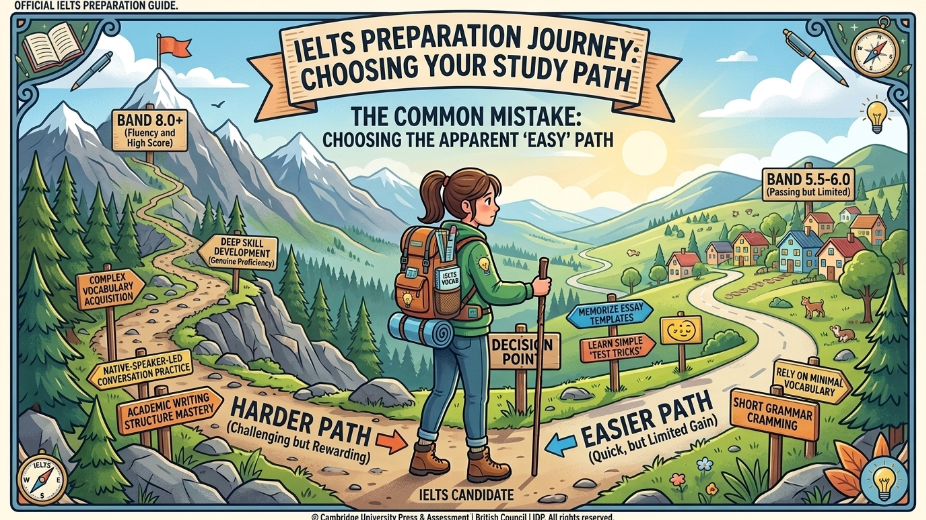
A lot of students hear that General Training Reading is generally considered less demanding than Academic Reading, and decide to book General Training regardless of what they actually need it for. This backfires almost every time.
Universities and professional bodies specifically require Academic scores because the test format mirrors the kind of Reading and Writing you’ll actually do in a degree program. Submitting a General Training score to a university, even a high one, is usually rejected outright, not because the score isn’t trustworthy, but because it simply doesn’t demonstrate the skill the institution is checking for.
The same works in reverse. Immigration authorities ask for General Training specifically because that’s what their point systems and English requirements are built around. An excellent Academic score submitted to the wrong immigration stream can also be turned away, or at minimum causes unnecessary delays while it gets clarified. Either way, you’re often looking at weeks of lost time and another test fee, purely because of a mix-up that a five-minute check could have prevented.
How to Confirm Which Version You Need
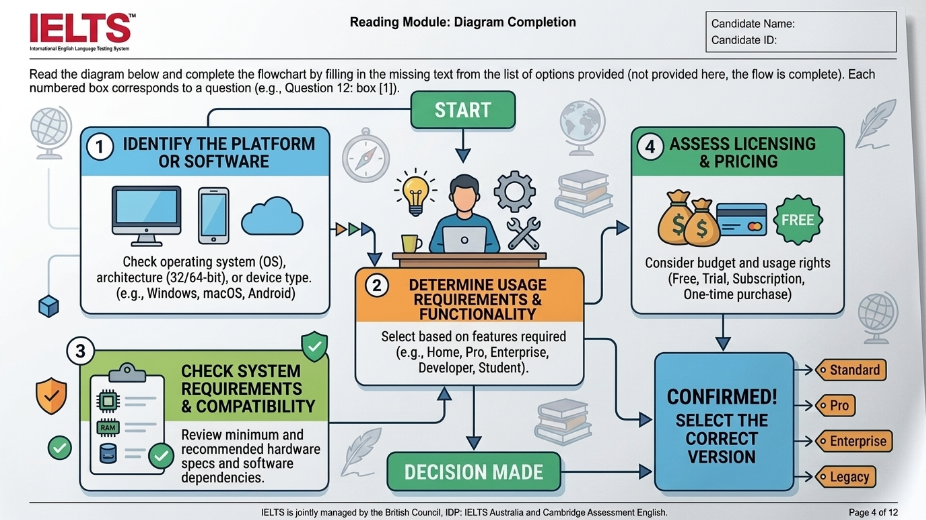
Don’t guess, and don’t rely on what a friend or relative said for their own application. Requirements are set by the receiving institution or immigration authority, not by IELTS itself, so the safest step is always to check directly.
- Read the admission or visa requirements page for the specific program you’re applying to.
- Look for the exact phrase “IELTS Academic” or “IELTS General Training” rather than assuming based on the word “IELTS” alone.
- If it’s genuinely unclear, contact the university’s admissions office or the relevant immigration authority before you book your test date.
- Ask your consultant or advisor to point to the specific requirement in Writing, rather than taking a verbal “General is fine” at face value.
- Keep a copy of the requirement in Writing, since test centers will ask which version you’re registering for and won’t decide it for you.
Frequently Asked Questions
Can I switch from one version to the other after booking?
Usually not without rebooking and paying the fee again, since the Reading and Writing materials differ completely between versions. Confirm which one you need before you register, not after.
Is General Training actually easier than Academic?
The Reading passages are generally considered less demanding, but “easier” doesn’t mean “accepted everywhere.” The right version is the one your specific university or immigration body actually requires.
Do Listening and Speaking scores count the same in both versions?
Yes. Since the content is identical, a Listening or Speaking band score means the same thing whether you sat for Academic or General Training.
Can one test result be used for both university admission and immigration?
Sometimes, but not always, and it depends on the specific institution and immigration authority involved. Since Academic and General Training serve different purposes, many people who eventually need both, say, a student who studies abroad and later applies for permanent residency, end up taking separate tests at different stages rather than one shared result.
Which version do most Pakistani students book?
It depends on their goal, not their city. Students applying to universities abroad, whether they’re based in Lahore, Faisalabad, or Multan, need Academic, while those pursuing immigration or work permits typically need General Training.
IELTS Academic and General Training aren’t really two versions of “the same test” in the way most people assume. They’re built for two different goals, and the only version that matters is the one your specific university, employer, or immigration authority asks for. Skip the guessing, confirm the exact requirement in Writing, and book accordingly, because redoing an entire IELTS test over a version mix-up is one of the most frustrating and preventable delays in the whole process.
If you’re building your English skills before test day, Live Training Lab’s Spoken English course is a practical, flexible way to strengthen the fundamentals that matter for either version you can see what’s available at livetraininglab.pk.