
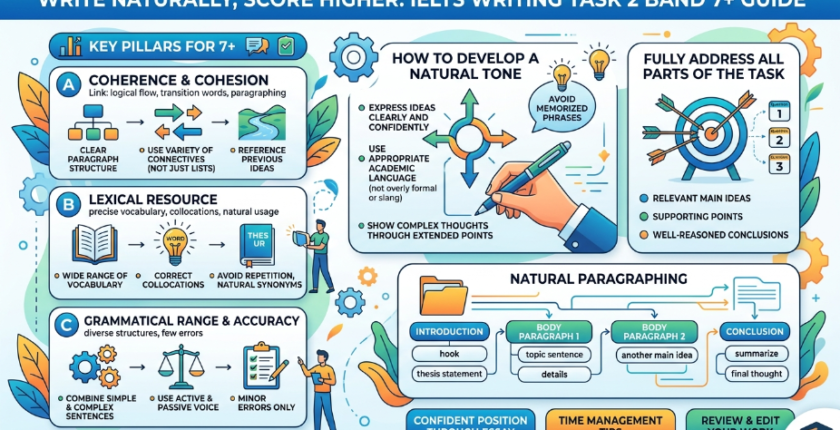
Write Naturally, Score Higher: IELTS Writing Task 2 Band 7+ Guide
Ask any IELTS teacher and they’ll tell you the same thing: templates feel safe right up until they cost you the band score you needed. You memorize a tidy structure, plug in a few borrowed phrases, and walk into the exam feeling prepared. Then the result comes back at Band 6, and you’re left wondering what went wrong.
Here’s what actually happened: the examiner has read that exact opening sentence a hundred times this month alone. Writing Task 2 rewards a specific position, developed ideas, and language that flexes to fit the question, not a script recycled from one topic to the next. This post breaks down what a genuine Band 7+ essay needs, with real examples of the difference between templated and natural writing, so you can build essays instead of memorizing them.
Write Smarter, Score Higher in IELTS Writing Task 2
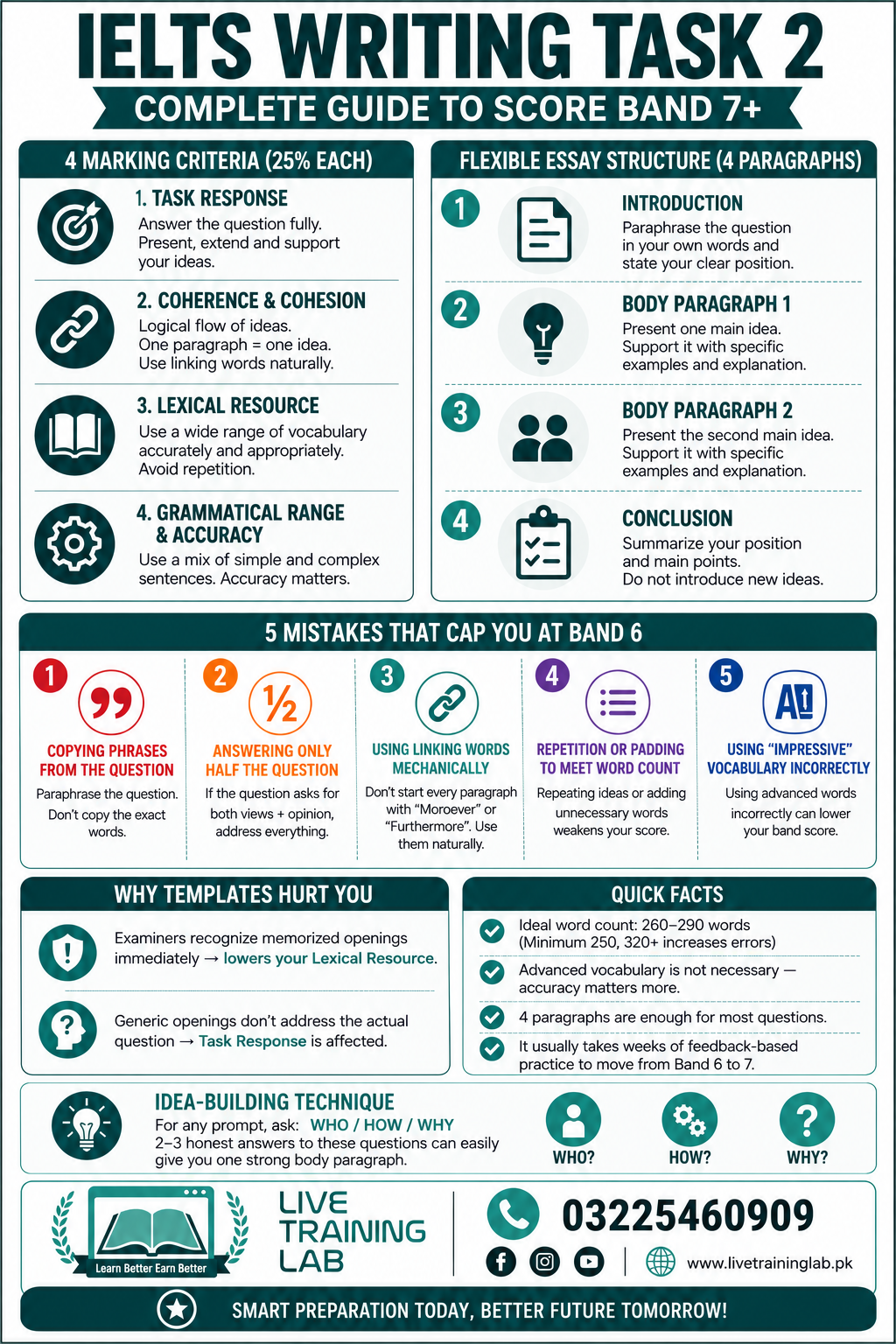
A high band score in IELTS Writing Task 2 is achieved through clear ideas, logical organization, and accurate language, not by memorizing templates or using difficult vocabulary. Understanding the four marking criteria, following a simple essay structure, and avoiding common mistakes can significantly improve your performance. With regular practice and personalized feedback, you can build the confidence and skills needed to reach Band 7 and above.

Why Templates Hold You Back From Band 7+
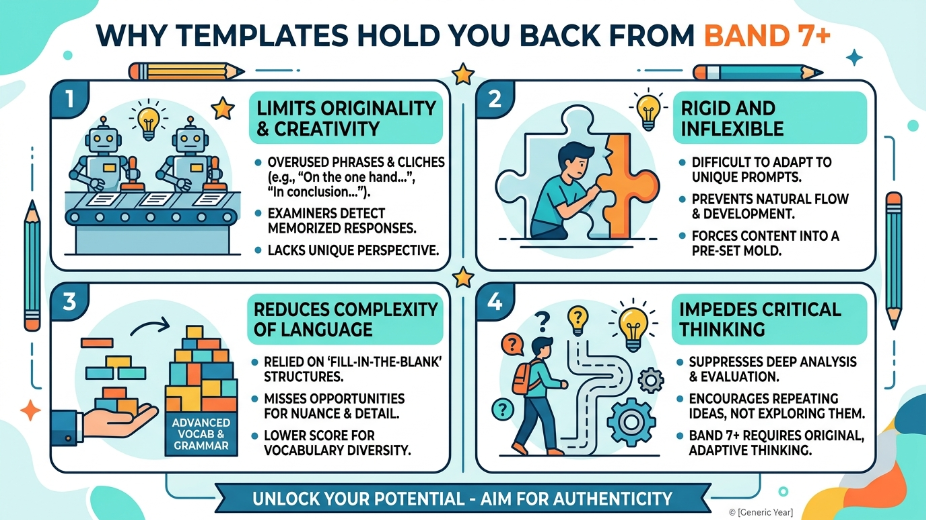
Templates are tempting because Writing Task 2 feels intimidating under a 40-minute time limit. But examiners aren’t grading you on how closely you follow a formula they’re grading four specific things, and a memorized structure works against at least three of them.
Take a common template opener: “Nowadays, it is a widely debated topic that…” followed by a generic restatement of the question. An examiner reading this immediately recognizes borrowed language rather than a genuine paraphrase, which limits your Lexical Resource score. Worse, because the sentence isn’t built around the actual question in front of you, it often fails to directly address what’s being asked, which drags down Task Response too.
Then there’s cohesion. Templates lean hard on mechanical linking words “Firstly,” “Moreover,” “Furthermore,” “In conclusion” dropped at the start of every paragraph whether they fit or not. Real Band 7+ writing builds cohesion more naturally, through pronouns, referencing, and varied structures, not a fixed set of connectors repeated in the same order every time.
What a Band 7+ Essay Actually Needs
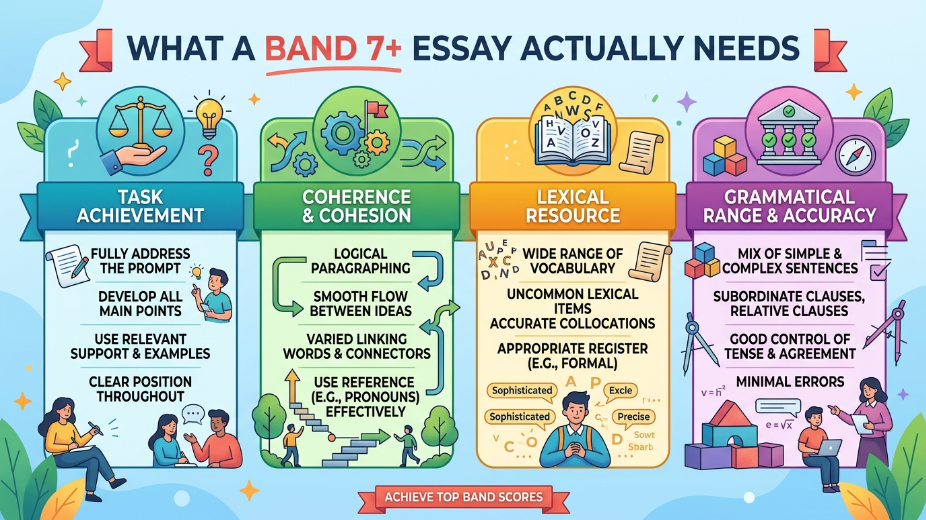
Every Task 2 essay is marked against four criteria, each worth 25% of your writing score:
- Task Response: You address every part of the question, not just the part you find easiest, and support your position with ideas that are genuinely developed, not just listed.
- Coherence and Cohesion: Your essay flows logically from one idea to the next, with each paragraph organized around one central point.
- Lexical Resource: You use vocabulary that’s accurate and varied for the topic, including some less common words used correctly, instead of repeating the same safe terms.
- Grammatical Range and Accuracy: You use a mix of simple and complex sentences with good control, allowing for occasional minor errors.
Notice that none of these criteria reward you for following a fixed structure. They reward flexibility, precision, and genuinely answering the question you were given.
A Flexible Structure You Can Adapt to Any Topic
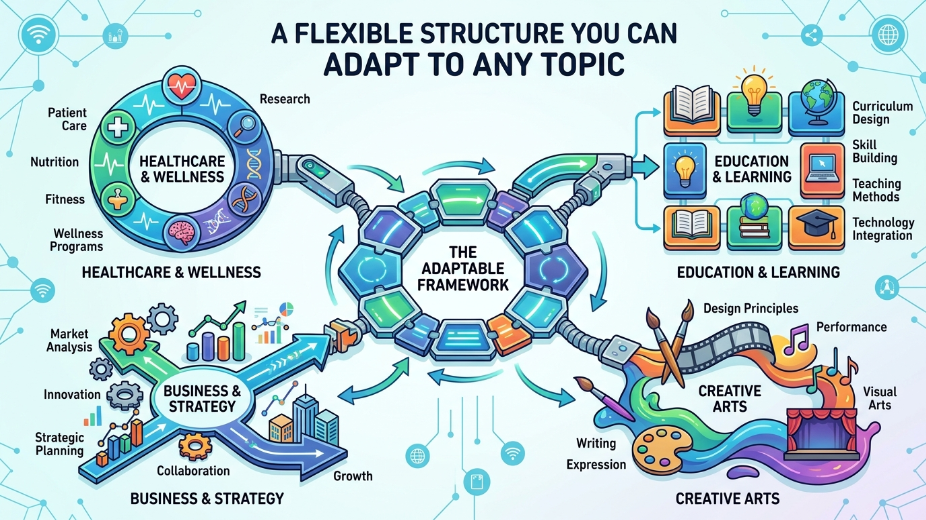
Having a structure isn’t the problem; memorizing sentences inside that structure is. A reliable four-paragraph shape still works well for most Task 2 questions:
- Introduction: Paraphrase the question in your own words, then state your position clearly.
- Body paragraph 1: One main idea, explained, then backed with a specific example.
- Body paragraph 2: A second main idea, following the same pattern.
- Conclusion: Summarize your position without introducing new ideas.
The difference between Band 6 and Band 7+ shows up in how you fill that shape, not the shape itself.
Turning a Weak Opening Into a Strong One
Here’s the same exam question handled two ways:
Question: Some people think governments should spend money on public transport instead of building new roads. To what extent do you agree?
Templated opening (weak): “Nowadays, transportation is a very important issue in today’s society. There are many advantages and disadvantages to this topic which I will discuss in this essay.”
Genuine paraphrase (strong): “Faced with rising traffic and pollution, many governments must choose between expanding road networks and investing in buses, trains, and metro systems. I largely agree that public transport deserves priority, though new roads still matter in specific situations.”
The second version does three things the first doesn’t: it paraphrases the actual question instead of restating it generically, it states a clear, specific position, and it hints at the essay’s real content instead of promising a vague discussion.
The Same Idea Applies to Body Paragraphs
Instead of “Firstly, public transport is good for the environment. This is very important nowadays,” a Band 7+ paragraph looks more like this:
“Investing in public transport directly reduces the number of private vehicles on the road, which is a major source of air pollution in most large cities. In Lahore, for instance, an expanded and reliable metro system would give commuters a genuine alternative to driving, rather than simply adding more highways for those same cars to sit in traffic on.”
Notice this paragraph never uses the word “firstly” the topic sentence itself signals that a new idea is starting, and the example is specific to a real city rather than a generic placeholder.
How to Build Ideas Quickly Without a Memorized Bank
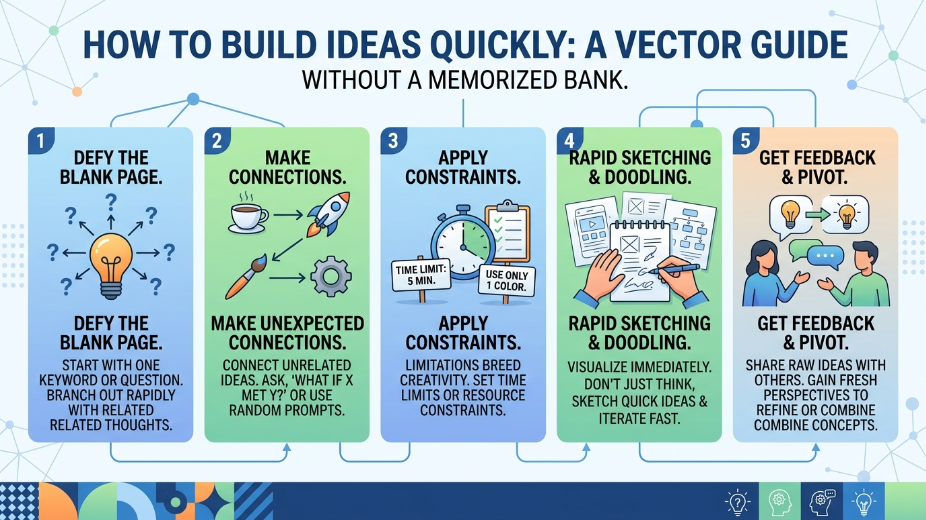
The real skill Band 7+ writers have isn’t a bigger vocabulary bank it’s the ability to generate relevant ideas fast, under time pressure. A few habits build this:
- Ask “who, how, why” for any prompt: Who is affected by this issue? How does it affect them? Why does that matter? Two or three honest answers usually give you a full body paragraph.
- Practice timed brainstorming separately from writing: Spend five minutes generating ideas for a random Task 2 question without writing a single full sentence. This trains the thinking speed you need on exam day.
- Read for reasoning, not facts: Opinion articles and editorials show you how writers structure an argument, which is more useful to copy than any vocabulary list.
Students preparing in Karachi, Islamabad, or Rawalpindi often find this brainstorming habit, more than grammar drills, is what finally moves their score from 6 to 7.
Common Mistakes That Cap Students at Band 6
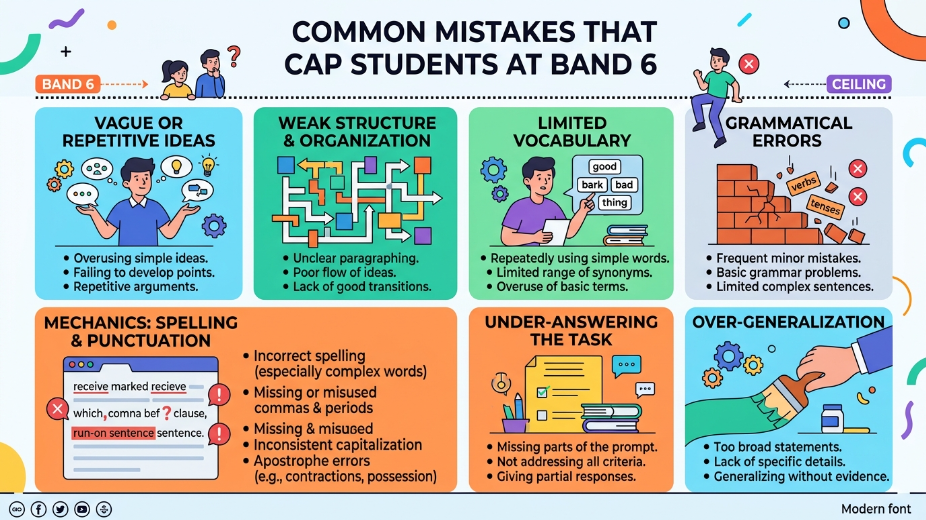
- Copying phrases straight from the question. Paraphrase instead direct copying doesn’t count toward your Lexical Resource and can even be flagged by examiners.
- Only partly answering the question. If the prompt asks you to discuss both views and give your opinion, doing just one half caps your Task Response score no matter how well the rest is written.
- Using linking words mechanically. Starting every paragraph with “Moreover” or “Furthermore” out of habit, rather than because the logic calls for it, reads as formulaic instead of fluent.
- Padding with repetition instead of development. Repeating the same point in different words to hit the word count is easy to spot and adds no real substance.
- Memorizing “impressive” vocabulary that doesn’t fit. A sophisticated word used slightly wrong hurts your score more than a simple word used correctly.
Frequently Asked Questions
Is it ever okay to use fixed phrases in Task 2?
A few are fine phrases like “on the other hand” or “for instance” are standard English, not templates. The problem starts when whole sentences or paragraph openings are memorized word for word and reused regardless of the question.
How many words should a Band 7 essay be?
Aim for 260–290 words. The minimum is 250, but writing exactly 250 often means ideas aren’t fully developed. Going much past 320 tends to introduce more errors without adding real value.
Will I lose marks for not knowing advanced vocabulary?
No. Band 7 doesn’t require rare or academic-sounding words it requires accuracy and flexibility with the vocabulary you do use. A well-chosen simple word beats a misused complex one every time.
Should I write four paragraphs or five?
Four works for most questions. A fifth paragraph only helps when the question genuinely has three distinct parts to address; otherwise it usually just dilutes your two strongest ideas.
How long does it take to move from Band 6 to Band 7 in writing?
It varies, but most students need several weeks of consistent, feedback-based practice rather than a single intensive session. Writing without feedback tends to repeat the same habits instead of correcting them.
Band 7+ in Writing Task 2 isn’t about owning a better template than the next candidate it’s about genuinely engaging with whatever question you’re given, on the day you’re given it. That means paraphrasing instead of reciting, developing two ideas properly instead of listing four thin ones, and letting your grammar and vocabulary flex naturally around your argument instead of forcing your argument into borrowed sentences.
If you’re working on your written English for more than just exam day, Live Training Lab’s online courses are built to be practical and beginner-friendly, with flexible schedules that fit around your existing routine you can see what’s currently available at livetraininglab.pk.