Blog
IELTS Test Format 2026: Key Changes You Need to Know
IELTS Test Format 2026: Key Changes You Need to Know
If you’re planning to take IELTS this year, stop and read this first.
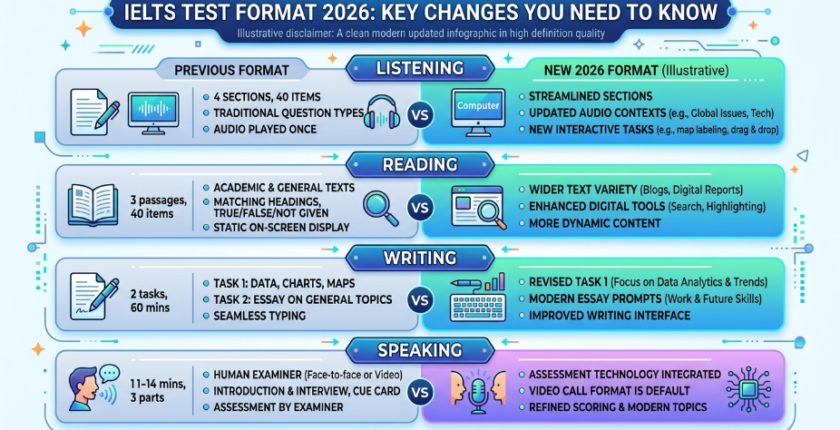
The IELTS exam has been relatively stable for years. Same four sections, same general structure, same paper-based format most people in Pakistan grew up preparing for. But 2026 marks the most significant shift the test has seen in a long time and if you’re preparing using old strategies or outdated practice books, you could be caught off guard on test day.
This post breaks down every confirmed change to the IELTS 2026 format clearly, honestly, and without unnecessary jargon. Whether you’re in Lahore, Karachi, Islamabad, or anywhere else in Pakistan, here’s what you actually need to know.
Stay Ahead with the Latest IELTS Updates
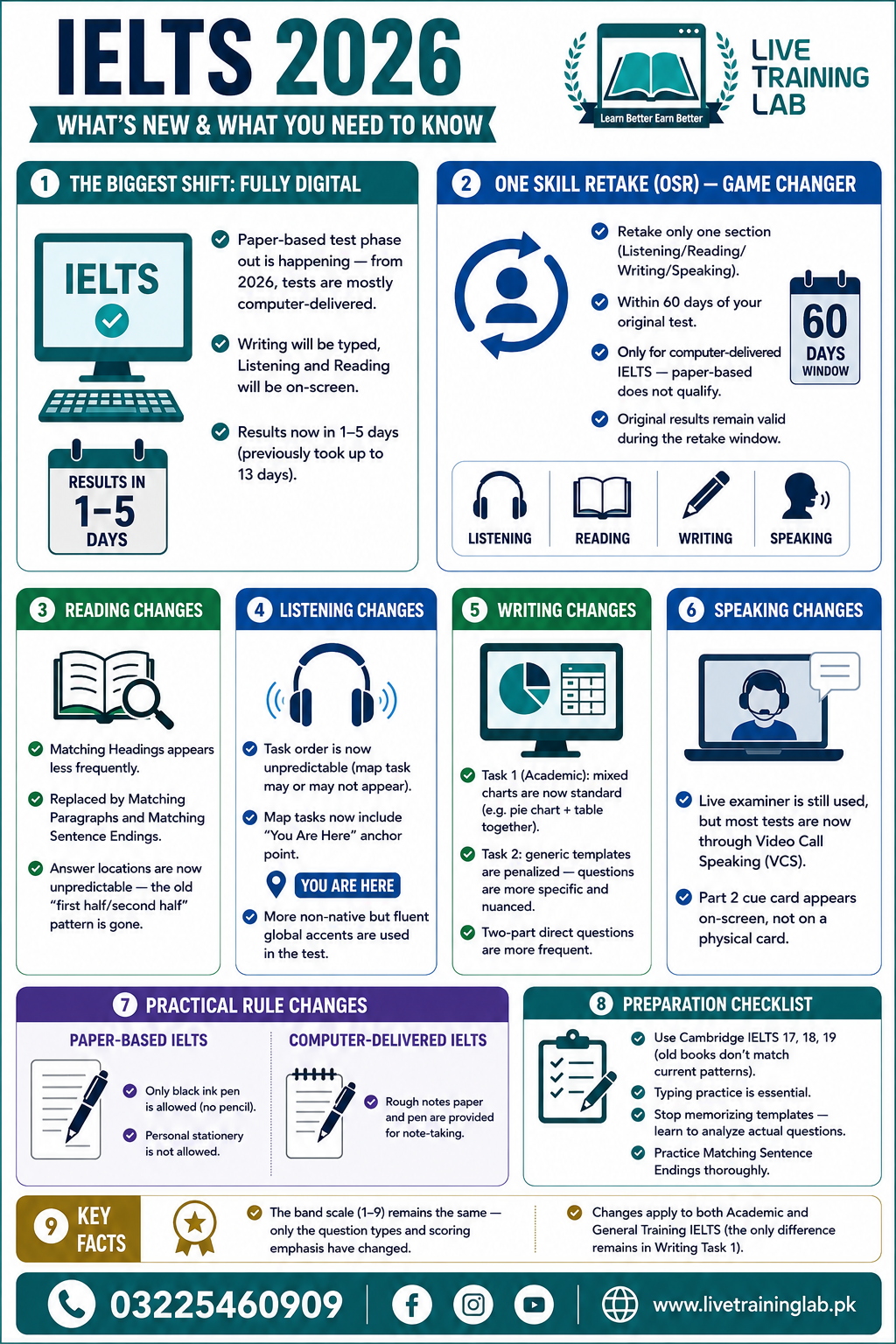
IELTS is evolving with more computer-delivered tests, faster results, updated question formats, and the One Skill Retake option. While the 1 to 9 band scale remains unchanged, candidates should adapt to the latest test patterns, improve typing skills, and practice with current materials to maximize their chances of achieving a higher band score.

The Biggest Shift IELTS Is Going Fully Digital
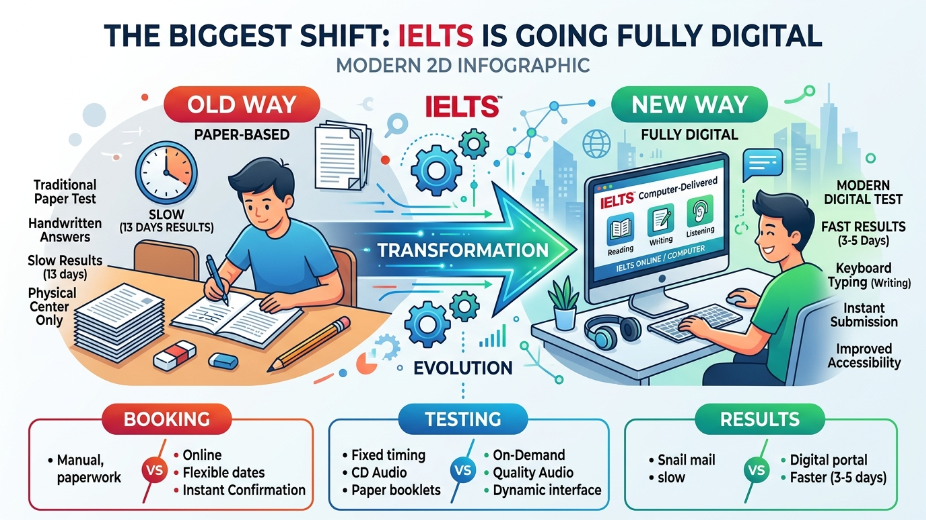
The most impactful change in 2026 is the move away from paper. From mid-2026 onwards, IELTS is transitioning to fully computer-delivered testing. Paper-based tests are being phased out, though timelines vary by test centre and location.
What this means for you practically:
- You’ll type your Writing answers instead of handwriting them.
- Listening and Reading are completed on-screen.
- A limited “Writing on Paper” hybrid option is available at some centres you write by hand, but complete Listening and Reading digitally.
- Results come back within 1 to 5 days instead of the 13-day wait most Pakistani students are used to
If you’ve been practising your handwriting speed, it’s time to practise typing your essays. Speed and accuracy on a keyboard matter now.
One Skill Retake: A Game Changer for Pakistani Students
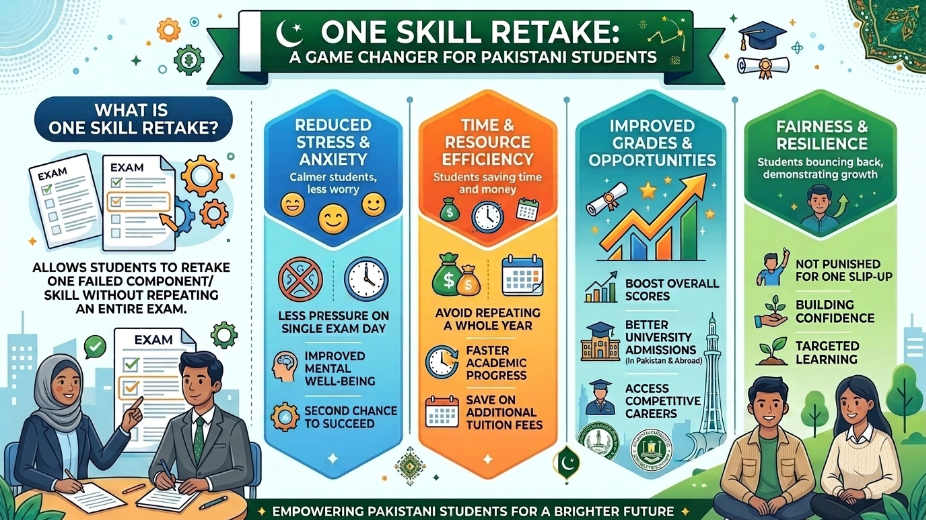
This is the update that’s getting the most attention and for good reason.
Previously, if you scored well in three sections but fell short in just one (say, Writing), you had to sit the entire 3-hour exam again. That meant more money, more time, and more stress.
With the One Skill Retake (OSR), you can now retake a single section Listening, Reading, Writing, or Speaking within 60 days of your original test.
Key conditions to know:
- Only available for Computer-Delivered IELTS paper-based tests don’t qualify
- You must book OSR through a participating test centre
- Your original test results remain valid during the retake window
- This applies to all four skills equally not just Writing
For students in Pakistan working toward UK, Australian, or Canadian visa requirements, this is a huge relief. One weak section no longer means starting from scratch.
What’s Changed in the Reading Section
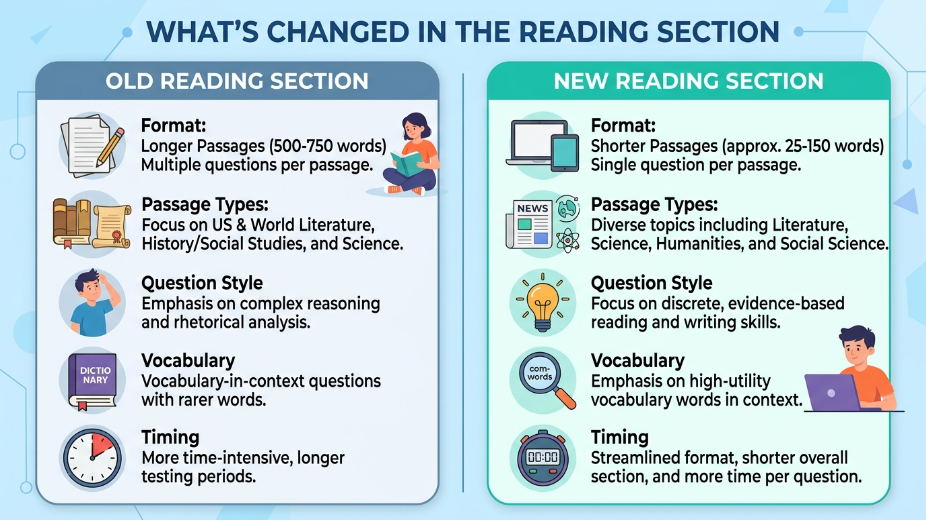
The Reading section has shifted in two important ways and both are designed to prevent “strategy hacking.”
Fewer Matching Headings Tasks
In past tests, many students relied heavily on skimming tricks to tackle Matching Headings. IELTS examiners noticed. In 2026, this question type appears significantly less often.
What’s replacing it:
- Matching Paragraphs Which paragraph contains the following information? Looks similar but requires finding specific information, not just grasping the overall idea
- Matching Sentence Endings You complete sentences by matching beginnings with correct endings from a list. This tests full grammatical and logical understanding you can’t keyword-skim your way through it.
Less Predictable Answer Locations
Older Cambridge books followed a logical pattern answers to the first set of questions appeared in the first half of the passage, the second set in the second half. That predictability is gone.
In 2026 papers, answer locations jump around within the passage. You need to actually read and understand the text, not just scan strategically.
What’s Changed in the Listening Section
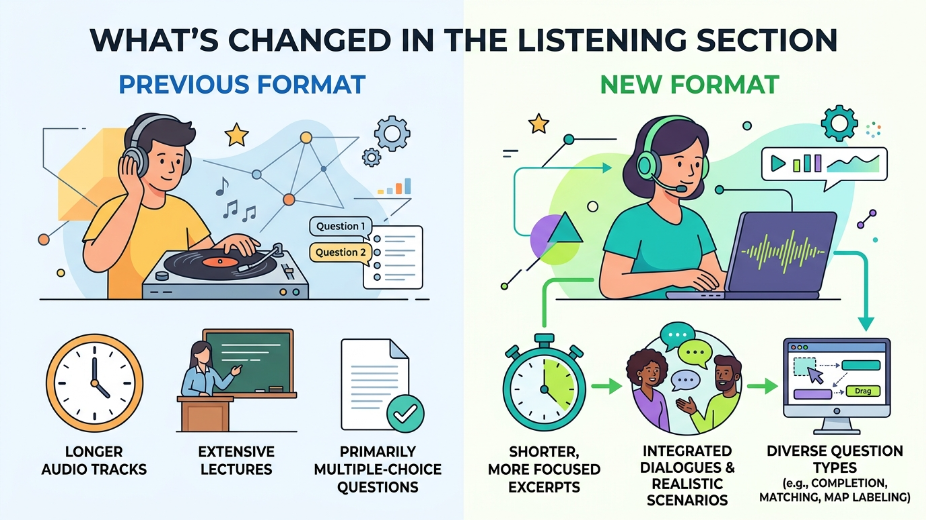
The Listening section keeps the same four question types, but the structure is no longer fixed.
Previously, you could almost always predict a large map task or a large matching section. Now:
- You might get two smaller matching tasks instead of one big one.
- Some tests have no map task at all, just multiple-choice questions throughout
- The order of task types is unpredictable; a map could appear earlier or later than expected.
One small but genuinely helpful update: map tasks now include a “You Are Here” anchor point on the map itself. This makes orientation much easier before the recording starts.
Also worth noting you’ll hear more non-native but fluent English accents in the audio. Global English speakers from various backgrounds now feature more prominently alongside traditional British and Australian voices.
What’s Changed in the Writing Section
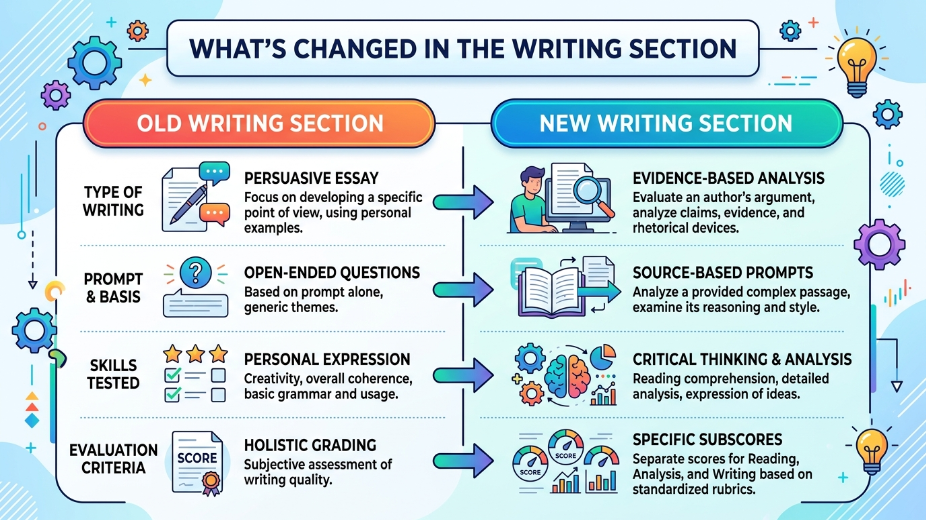
Task 1 (Academic) Mixed Charts Are Now Standard
Simple single-graph tasks are fading. In 2026, candidates should expect mixed data tasks, for example, a pie chart combined with a table, or a bar graph alongside a line graph. You need to synthesise information across multiple visuals, not just describe one.
Task 2 (Essay) Generic Templates Won’t Work Anymore
This is critical. IELTS examiners are now specifically instructed to penalise template-based or memorised essay structures. The prompts in 2026 are more specific and nuanced; instead of a broad question like “Is technology good?”, you might get something like “Should governments regulate social media content to protect young people?”
A generic five-paragraph structure won’t cut it. Your essay actually needs to engage with the specific question being asked.
Additionally, two direct question tasks are appearing more frequently, which ask two separate things and require you to address both clearly.
What’s Changed in the Speaking Section
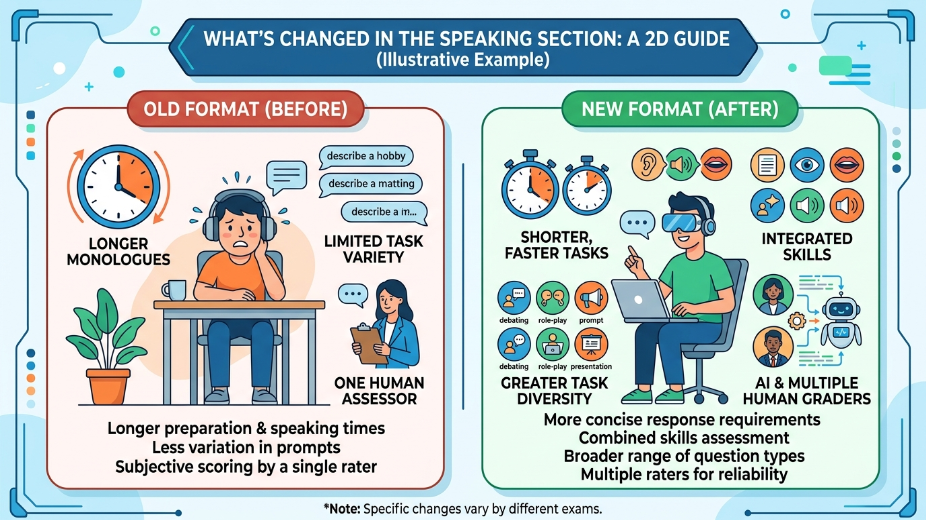
The Speaking section still involves a live human examiner, which hasn’t changed. But the delivery method is shifting.
Many IDP and British Council centres are moving to Video Call Speaking (VCS). You still speak to a real examiner, but they appear on a screen rather than sitting across a table from you.
For Part 2 (the long turn with a topic card), the prompt now appears on a monitor screen instead of a physical cue card. You take notes on scratch paper while reading it digitally.
The scoring criteria remain the same: fluency, coherence, vocabulary, grammar, and pronunciation, but you’ll need to feel comfortable speaking naturally to a screen rather than a person in the room.
Key Rule Changes: What Could Catch You Off Guard
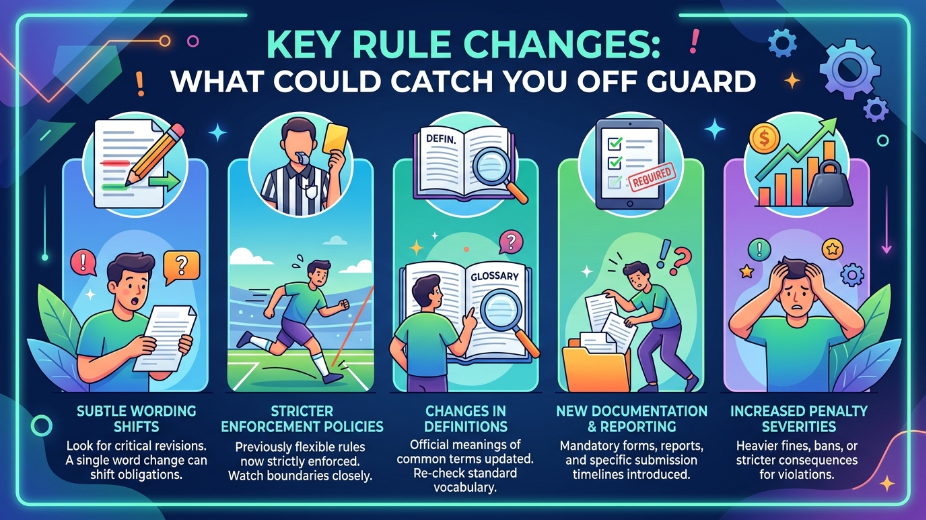
A few practical rule changes that Pakistani test-takers need to know:
- A black ink pen is mandatory for paper-based tests pencils are no longer allowed in the test room. The test centre provides the pen.
- Personal stationery is not permitted don’t bring your own pens, pencils, or highlighters
- For Computer-Delivered IELTS, you’ll type on screen and receive paper and a pen for rough notes only
- IDP order of sections (computer): Listening → Reading → Writing
- British Council order may differ always confirm with your specific test centre
How to Adjust Your Preparation for 2026
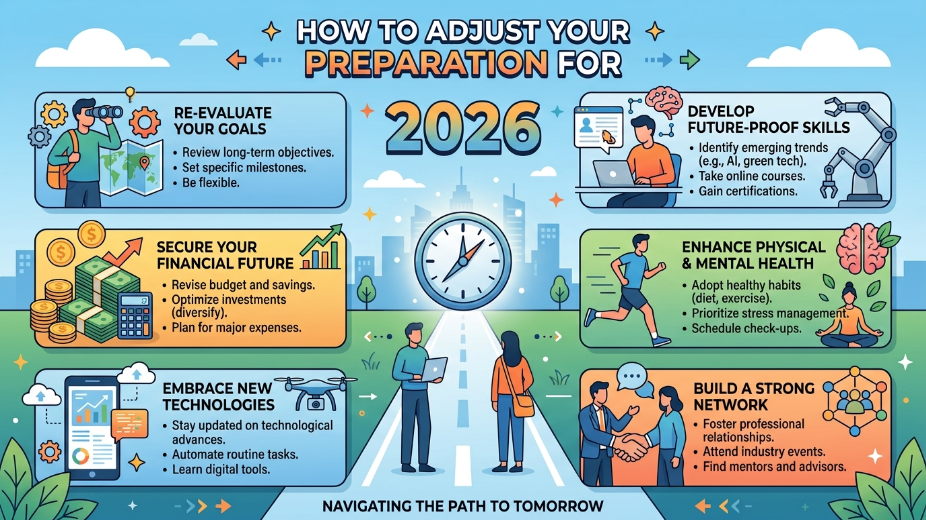
Given all these changes, here’s a practical checklist for Pakistani students preparing right now:
- Use recent Cambridge IELTS books Cambridge 18 and 19 reflect the newer question patterns more accurately than older editions
- Practice typing essays If you’re taking the computer-based test, timed typing practice matters
- Stop memorising essay templates Learn how to analyse and respond to specific questions instead
- Prepare for unpredictable Listening structures Don’t rely on task-order predictions
- Practise Matching Sentence Endings This question type is appearing far more often now
- Get comfortable with screen-based Reading On-screen Reading is different from paper; practice with digital mock tests
FAQ: IELTS 2026 Format Changes
Q1. Is the IELTS scoring scale (bands 1 to 9) changing in 2026?
No. The band scoring scale remains the same. What’s changing is how certain question types are weighted and how writing band descriptors are applied examiners now penalise generic, templated responses more strictly.
Q2. Is the One Skill Retake available in Pakistan?
OSR availability depends on the individual test centre. Check with your nearest IDP or British Council centre in Lahore, Karachi, or Islamabad to confirm whether they offer it and what the booking process looks like.
Q3. Can I still take a paper-based IELTS test in Pakistan in 2026?
Some centres may still offer paper-based tests during the transition period, but the shift to computer-delivered testing is actively underway. Confirm with your centre before booking.
Q4. Will older Cambridge IELTS books still be useful for 2026 preparation?
Partially. The language skills they build are still relevant, but the question patterns in Cambridge 14 and earlier don’t reflect 2026’s changes well. Use Cambridge 17, 18, and 19 as your primary practice material.
Q5. Does the IELTS change affect Academic and General Training equally?
Most structural changes digital delivery, One Skill Retake, Writing Task 2 reforms, Listening structure shifts apply to both Academic and General Training. Task 1 differences remain (Academic uses graphs/charts; General Training uses letters), but both are affected by the broader format evolution.
The 2026 IELTS isn’t a harder exam but it is a smarter one. The test is getting better at identifying genuine English ability and weeding out people who’ve memorised their way through preparation. That’s actually fair.
For Pakistani students, the good news is that these changes reward real skills: the ability to read carefully, write thoughtfully, listen actively, and speak naturally. Those are learnable. They require the right preparation approach and up-to-date materials.
Start preparing with the current format in mind. Don’t let outdated study habits cost you a band point that could have been yours.
If you want to sharpen your English communication skills from the ground up whether for IELTS, professional work, or freelancing Live Training Lab offers a focused Spoken English course you can take entirely online, from anywhere in Pakistan. Explore it at livetraininglab.pk.