
- Learn to Build Interactive Websites from Scratch
- Start Your Career in Web Development
- Work on Real Coding Projects During Training
- Learn Frontend & Basic Backend Concepts
- Write Clean & Professional JavaScript Code
- Build Dynamic Websites with Real Features
- Step-by-Step Guidance for Beginners
- High Demand Skill for Jobs & Freelancing
JavaScript Programming Course In Pakistan

🎯Learn JavaScript & Start Your Web Development Career
Live Online JavaScript Training to Build Interactive Websites, Learn Coding & Start Freelancing or Job in Tech
COURSE DESCRIPTION
What is a JavaScript course?
JavaScript is the language that makes a web page do something. HTML gives a page its structure and CSS gives it a look, but the moment a menu opens, a form checks itself or content loads without a refresh, that is JavaScript running in the browser.
Looking for a JavaScript course near you? Ours runs live and online, so you join at your batch time, code along with the trainer, and get your errors found on the spot instead of guessing at them alone.
This is a hands-on course, so you write code in every live session rather than watching someone else write it. You start with client-side JavaScript and work through turning a static HTML page into something that responds to the person using it. The early sessions cover adding JavaScript to a page, variables and data types, dialogs for talking to the user, and the built-in objects you will use constantly, including Math, Array, String and Date. After that come the parts that make you useful: the Document Object Model, event handling, writing functions, validating forms properly, and working with JSON and Ajax so a page can talk to a server without reloading. You also cover the language syntax itself and how browser code fits together with what runs on the server, which is the piece most self-taught learners never quite pin down.
JavaScript is a text-based programming language used on the client-side and server-side. It makes pages interactive, while HTML and CSS handle structure and style. JavaScript gives web pages of interactive elements that engage the user. JavaScript is a programming language commonly used in web development. Like server-side scripting languages such as PHP and ASP, JavaScript code can be inserted anywhere within the HTML of a webpage.
Benefits of JavaScript Course From Us:
JavaScript runs straight in the browser, so anything that does not need data from a server happens instantly. It is also one of the friendlier languages to start with, since you can open a browser console and see the result of a line of code immediately.
Whether you want to add features to your own site or work as a developer, LiveTrainingLab has a live 4-week course that takes you there step by step.
Why Choose Us:
Choosing a direction is the hard part, especially with so much conflicting advice online. LiveTrainingLab puts you with a trainer who writes JavaScript for real projects and can tell you what a first job or a first client actually expects.
LiveTrainingLab is a Pakistan-based institute running live classes in small batches. Sessions are at fixed morning and evening timings, so students and working people can both find a slot, and each class ends with something to build before the next one. Sit in on a live session before you enrol and judge the teaching yourself. Your trainer works with JavaScript outside the classroom, which is why the debugging tips in class come from real projects rather than a textbook. Because every class is live and online, students join the same batch from anywhere in Pakistan.
Beginners and working professionals both sit in our batches, and the syllabus starts from scratch either way. Ask us about the next batch if you want to start working towards becoming a confident JavaScript developer with projects to show.
LiveTrainingLab JavaScript Course Goals
Almost every site people use daily runs on JavaScript, which is why it stays near the top of the list when employers and clients ask for skills. If you are thinking about joining our JavaScript course and are not sure what it covers or whether it suits your level, the next few lines set it out plainly. The 4-week plan runs from syntax and functions through the DOM and events to JSON, Ajax and a final project.
Here is a short walk through the course so you know what the 4 weeks actually cover.
Build a Real JavaScript Foundation, Step by Step
You start with JavaScript syntax, variables and functions, then move up to the DOM, events, form validation and Ajax. Sessions are taught live in English or Urdu, with a coding task in each one that the trainer checks while you are still in class. Batches run at fixed times over 4 weeks.
Get Your Certificate After the 4 Weeks
You finish with a LiveTrainingLab certificate for the JavaScript course, issued once the 4 weeks and the final assessment task are complete. The certificate helps, but the working scripts and the project you build in class are what a client or an employer will actually look at.
Working scripts you can show a client
Practice files from every live session
A final assessment task to prove what you learned
Where JavaScript Skills Get Used at Work
JavaScript sits behind almost every front-end job advertised, and it is one of the few skills you can start freelancing with early: form validation, small interactive features, fixes to an existing site. By the end of 4 weeks you can build those yourself and explain your code to whoever asked for it.
What You Will Learn in These Live Classes
- Including JavaScript in a Web page
- Using the Document Object Model (DOM) to access the HTML elements on the page dynamically
- Using JavaScript objects effectively, including the window object and thenavigator object
- Creating and using variables
- Using event handlers to handle user-triggered events
- Using regular expressions with string methods to perform basic validation
- Working with primitive data types
- Passing arguments to a function
- Using conditional constructs and loops
- Debugging JavaScript code
- Using Geolocation and Web Storage JavaScript APIs
- Working with JSON objects
- Using Ajax to make asynchronous calls to a Web server
How Our Live JavaScript Classes Work
Every session is taught live by a trainer at a fixed time, with a small batch. You have your editor and browser console open and you write the code along with the class, so functions, event handlers and DOM work get built while somebody is there to check them. Share your screen and the trainer can read the error with you.
Questions get answered as they come up, in English or Urdu. Each class ends with a coding task, and the next one opens by reviewing what you wrote. Over 4 weeks that leaves you with working scripts rather than pages of copied syntax.
Why a Live Class Beats a Recorded JavaScript Course
Free tutorials are everywhere, and most people who start one stop at their first real bug. The content was never the problem. Sitting alone with a console error you do not understand is what ends it, usually somewhere around the DOM.
In a live class you share the screen and the cause is found in a minute, but more importantly you watch how it was found. Learning to read an error message and trace it back is most of what separates someone who can code from someone who has watched coding.


100% online courses
Start instantly and learn at your own schedule.

Flexible Schedule
Set and maintain flexible deadlines.

Learn the latest skills
with on-demand training and development programs

Shareable certificate
Earn a Certificate upon completion
Shareable on Social Media
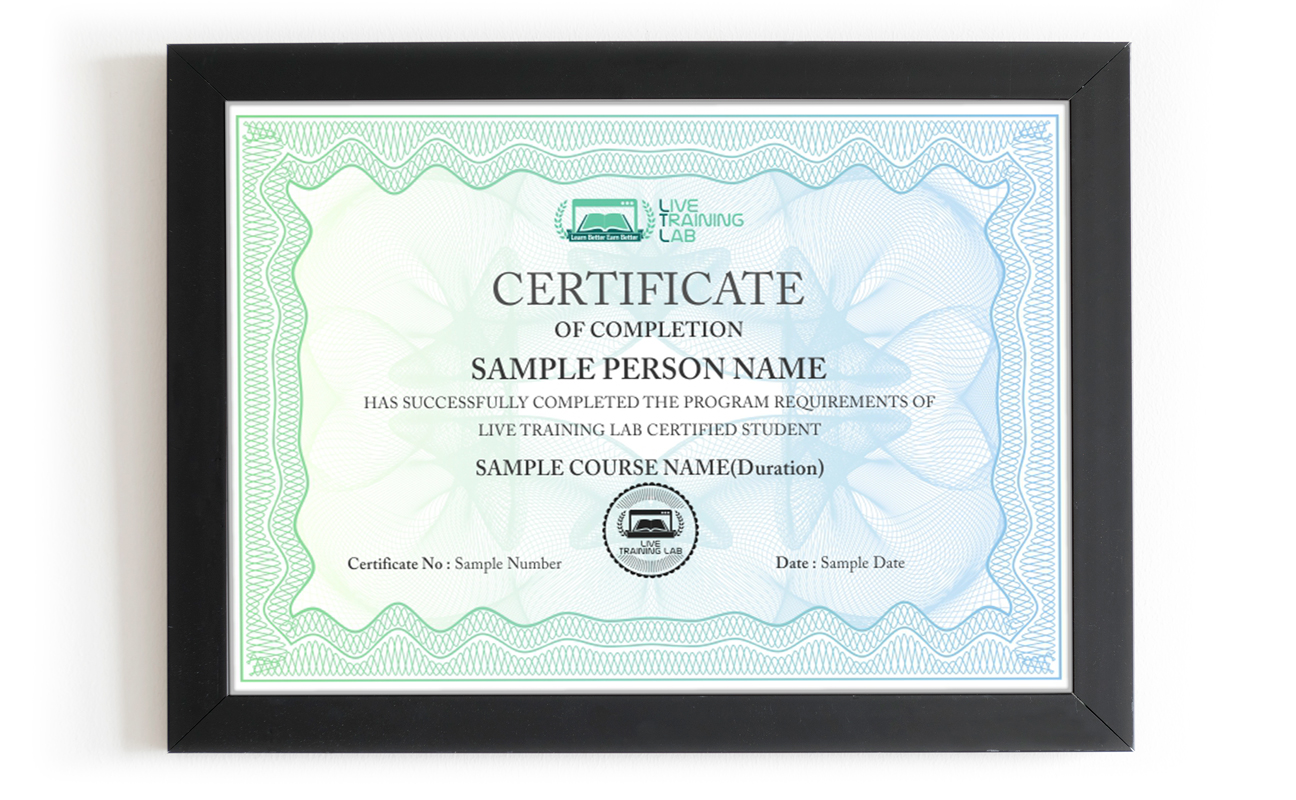
You can share your Certificate in the Certifications section of your social profile, on printed resumes, CVs, or other documents.
CURRICULUM
- Including JavaScript in a Page
- Evolution of the JavaScript Language
- Common Misconceptions About JavaScript
- ES5 vs ES6
- Using the JavaScript Console
- Conditional Constructs
- Looping Constructs
- Branching Statements
- Equality and Identity Operators
- Logical and Comparison Operators
- Error Handling
- Declaring Functions
- Invoking Functions
- Named and Anonymous Functions
- Passing Arguments
- Local vs. Global Variables
- Returning Values from a Function
- The this Keyword
- Default Parameters
- Explaining Closures
- Selecting DOM Elements
- Modifying Page Content with the DOM
- Manipulating CSS using JavaScript
- Accessing Forms from JavaScript
- Working with Form Elements
- Validating Form Fields
- Canceling Form Submission
- Understanding Objects
- Defining Custom Objects
- Extending an Existing Object with prototype
- Using the in and instanceof Operators
- Overview of JSON
- Using JSON.stringify and JSON.parse
- Web Storage API
- Geolocation API
- Fullscreen API
- Page Visibility API
- What is a Library?
- What is a Framework?
- Popular JavaScript Tools
- Overview of Polyfills
- Using Strict Mode
- Adding Comments
- Debugging JavaScript Code
- Declaring Variables
- Using JavaScript Primitive Types
- Performing Data Conversions
- Interacting with the User
- Working with JavaScript Operators
- Using the Math and Date Objects
- Creating String Objects
- Using String Methods
- Creating Number Objects
- Formatting Numbers
- Creating Arrays
- Accessing Array Elements
- Common Array Methods
- Defining and Using Associative Arrays
- Predefined Object Arrays
- Overview of the Browser Object Model
- Using the window Object
- Using the document Object
- navigator Object
- location Object
- screen Object
- Overview of JavaScript Events
- Adding Event Handlers
- Mouse and Keyboard Events
- Preventing Default Behavior
- Canceling Events
- Overview of Regular Expressions
- Using Regular Expressions in JavaScript
- Validating Strings with Regular Expressions
- Using Back references
- Overview of Ajax
- The XML Http Request Object
- Configuring an Ajax Request
- Using JSON with Ajax
- What is a Design Pattern?
- Design Pattern Categories
- Popular Design Patterns
- Collecting Together Reference Material
- Final Assessment Task
- Presentation
Batches, Timings and the 4-Week Plan
The JavaScript course runs over 4 weeks and follows the curriculum above. Week one covers including JavaScript in a page, the console, variables, data types, operators, conditionals, loops and error handling. Week two moves to functions, scope, closures, objects, prototypes and arrays. Week three is the browser: the DOM, selecting and modifying elements, events, forms and validation, plus regular expressions. Week four covers JSON, Ajax, Web Storage and Geolocation APIs, design patterns, debugging and the final assessment task.
Batches run morning and evening so students and working people can both find a slot. Your timing is confirmed at enrolment, and the trainer stays reachable through the course.
Who This JavaScript Course Is For
Anyone who already writes HTML and CSS and keeps hitting the wall where a page needs to actually do something. Students and fresh graduates aiming at a front-end job. Freelancers who want to take on more than static pages. WordPress and small business site owners tired of paying for every small fix. Career changers starting from zero.
No programming background is required. Week one assumes you have never written a function. If you already know some JavaScript and want the DOM, Ajax and project side, mention it at enrolment and the early sessions will move faster for you.
Why Choose LiveTrainingLab for JavaScript
Plenty of people try to learn JavaScript from recorded videos and PDF files. It looks cheap and flexible, and then the folder sits untouched after the first broken script. Nobody reads your code, nobody explains the error in the console, and there is no set day when the next lesson happens.
When we ask learners why the self-study route did not work for them, the answer is usually a version of the same thing.
Reading a PDF never built the skill. It turned into memorising syntax instead of actually writing code. With a recording there is nobody to ask when your function returns undefined, and no task that gets checked. A live class fixes both. You share your screen, the trainer reads the error with you, and it is sorted in the same session.
So the safer route is a live JavaScript class with a trainer who writes code every day, watches your screen while you build, and sets the pace to suit you. In our sessions your trainer will:
- Start at your level, from your first line of code or from wherever your current projects already need you to be.
- Give you a coding task in every session and debug your mistakes on the spot, so the reasoning behind the fix actually sticks.
Take your questions in English or Urdu, so you can ask freely and leave the session with the concept clear rather than half understood.
JavaScript is used everywhere the web is, so the skill travels. Plenty of our students take small freelance jobs for clients abroad while still living here, because the work only needs code, a laptop and a connection.
-
You do not have to take our word for it. Sit in on a live LiveTrainingLab session first, see how the trainer handles questions, and decide after that.
The JavaScript course runs as a live class with a student guide and ready-made practice files, so there is always something in front of you to work on. The exercises come from trainers who ship real code, not from a generic manual. We are a Pakistan-based team, and students join our batches from home, from the office and from outside the country.
Two things we hear often from students:
- Many learners simply cannot travel to a classroom every week.
- Others hesitate to ask questions in front of a full room.
A live online class removes both problems. You join the session from wherever you are, with your camera on or off, and you can type your question in the chat if you would rather not speak. The trainer answers it in the same class, so nothing gets carried over to next week.
- You join from home, on camera or with your mic only, whichever suits you.
You can ask the trainer to repeat a step as many times as you need.
Our course runs over 4 weeks of live classes, which is enough to write working JavaScript and finish a project. Getting properly comfortable takes longer, and it comes from building things after the course, which is why you keep the material and the practice files.
Language stops a lot of capable people from getting far with programming. The logic is there, the English is not, and the class moves too quickly to follow.
So our trainers teach the JavaScript course in English or Urdu, and they switch between the two mid-session when it helps someone follow. Ask your question in whichever language you think in. Batch timings are set when you enrol, and the course runs over 4 weeks.
Look for a course where you write code in front of a trainer and finish something real. Watching syntax explained is easy. Building a working feature, breaking it, and fixing it with someone watching is what actually teaches you, and that is how LiveTrainingLab batches run.
LiveTrainingLab students leave with more than a certificate at the end of the 4 weeks. Here is what comes with the JavaScript course:
- Real coding briefs to practise on
- Course material and practice files, free
- Guidance on showing your code in interviews
We want solid JavaScript skills to stay within reach of students and working people, not priced like a corporate bootcamp. The fee stays low without shortening the live sessions or crowding the batch.
Every student gets the same attention from the trainer, whichever batch they sit in. Ask us about current fee options when you enquire, and we will tell you what the 4-week course costs before you commit to anything.
It helps, but it is not required. The first sessions cover enough page structure for you to follow along, and your trainer will fill any gaps as they come up. If you have never touched HTML at all, say so at enrolment.
A laptop or desktop, a steady internet connection and a headset. Classes run on Zoom, so the app or a browser is enough to join. Your trainer will help you set up a code editor and the browser console in the first session.
About Instructor

Zohaib Baig
Before engineering, I developed and implemented CI (Continuous Improvement) management systems in companies across America in various industries to include a military finance organization.
₨32,000.00₨16,000.00